Archive for the ‘Latest News’ Category


Meet some of our team

Tue, May 3rd, 2011

We recently appointed another trainer and assistant in the KZN area, Grant Godsmark, a  young and dynamic Genetic Hons graduate from UCT, with a passion for DNA. This weeks blog entry has been written by Grant and looks at the reasons why he thinks we urgently need DNA

Grant Godsmark at a Training Workshop

Grant Godsmark at a Training Workshop

legislation in this country. As it stands, the latest information indicates that the Portfolio Committee’s “study tour” of the UK and Canadian DNA labs  is scheduled for the 24th of June 2011 to the 10th of July 2011. That is a total of 15 days. Wow. Is that not a long time to spend viewing two labs? How do you feel about this? Read how we feel! Let us know what you think, by posting a comment or writing on our Facebook page.

This is what one reader had to say:

“I am working for a Rape Centre, every day I see the people these ministers are suppose to protect. Small children are raped by serial rapist who roam the streets and cannot be arrested or sentenced because the DNA project does not get the urgent attention it needs!!! Why is everything in this great country of us backwards, is money and freedom to do as they wish so important to our leaders. PLEASE wake up and start looking after the innocent!!!!”

Here is what Grant has to say:

Is South Africa missing out on the benefits of using DNA to help apprehend criminals?

We have all watched an episode of CSI, or other detective programs, and so we know how important evidence left at the crime scene can be. In every episode the criminal is caught with the help of evidence (often DNA) left at the scene of the crime. Although things happen really fast on TV….. all the forensic techniques that are shown are actually used by police to help solve crime. In reality DNA profiling is successfully used every day by police forces all over the world to apprehend and convict criminals. So you may be wondering: What are we doing in South Africa?

Well, you will be pleased to know that we have state of the art equipment that is used to analyze DNA evidence found at crime scenes. This equipment includes the world’s first fully automated system that can be used for high volume forensic DNA analysis.  But despite access to this amazing technology, South Africa is not maximizing the use of DNA as a forensic tool. One reason for this is that we do not have the necessary legislation to allow our police force to use the technology to its full potential. In South Africa current legislation does not allow for all people arrested, or convicted of a crime to have their DNA profile placed on the National DNA Database of South Africa (NDDSA). If this was to happen then when police do not have a suspect, and the perpetrator is been previously arrested or convicted, a comparison between the crime scene profile and profiles on the database may provide police with a suspect. Amendments to the current legislation have been proposed which will allow for all evidence collected at crime scenes to be compared to the database and possible suspects to be identified. Click here for more details.

This system is currently being used in USA, UK and Europe with great results. In the UK, in 70% of cases where DNA profiles from crime scene evidence are loaded onto the database, there is a match with someone already on the database. This means that when police have no suspect they are given a lead in the case just by searching the database. Imagine how effective this would be in South Africa where most of our criminals have committed many crimes – we just need to get them on the database once!

Unfortunately, the parliamentary committee tasked with considering the changes in legislation has been dragging their heels since 2009. In July they plan on going on a fact finding mission to the UK and Canada before considering implementing this legislation. This despite the fact that DNA databases have been effectively used by these countries since 1995. So…..why should South Africans, who live with some of the highest crime rates in the world, not be able to benefit from this incredible technology? The reason is simply that a small piece of legislation is the final hurdle keeping us from convicting the people responsible for crimes like murder and rape in South Africa. We all need to fight for this legislation to be passed as soon as possible so that we can make criminals accountable for their actions. We need everyone to support the proposed changes in legislation and to put pressure onto the committee to pass the amendment. All South Africans will then be able to breathe a little easier knowing that if something happens to our loved ones, the SAPS will finally be able to do the best they can to apprehend these criminals.

Written by Grant Godsmark

Database for DNA key to full sex crime law

Wed, Apr 13th, 2011

The below article makes for interesting reading insofar as demonstrating the power of a DNA database as well as the implications of not having proper legislation in place – it illustrates that an expanded DNA Database strengthens criminal investigations which in turn provides a safer environment, safeguards the rights of law-abiding citizens and improves trial efficiency. This not only brings comfort to victims and their families, and promotes fairness and justice but also clears innocent suspects and reduces miscarriages of justice.. . What is most poignant is the writer’s observation that long documentation processes, poor administrative efficiency and bureaucracy which have prevented the enactment of proper DNA legislation, are tantamount to being “accomplices” to the murder of the young girl in this story, and many more to come.

How tragic too, that as I write this, I feel that I am preaching to the converted (ie the people who read this blog), when the real ‘accomplices’ in South Africa hold us and future victims to ransom by their lack of efficiency, bureaucracy and ignorance in failing to pass the DNA legislation so desperately needed in SA.

Database for DNA key to full sex crime law

By Sandy Yeh

A junior-high school girl in Yunlin County was recently raped and murdered. A repeat sex offender who had just been released on parole is suspected of committing these acts. As a result of the ensuing public anger, we may finally have a chance to break through the blockade of so-called “human rights groups” that are opposed to amending the Sexual Assault Crime Prevention Act. If approved, judges will be able to follow the example of Megan’s Law in the US and decide to publish the names and photos of repeat sexual offenders as well as the nature of their crime in order to avoid similar tragedies.

Following several child assault crimes that have highlighted the flaws of the act and the rise of the “White Rose” movement in September last year, the legislature is now expected to pass the amendment. Still, the information and monitoring of sex offenders alone will not be enough to prevent them from committing crimes again. Nor will they put an end to sex assault crimes. Just as the “protection order” in the Domestic Violence Prevention Act will not prevent victims of domestic violence from being abused, complementary measures are required. In this case, the most important measure is building a DNA database on sex offenders.

A US newspaper recently reported a similar sexual assault case that happened in Maryland in July 2003, though the suspect was only arrested in Wisconsin years later. Just like the Taiwanese girl, the victim was 13 years old at the time of the crime. The difference is that she survived and the police could take complete samples of the suspect’s DNA. It took some time, but they were able to make a breakthrough seven years later thanks to the strengthening of the DNA database as a result of legislative amendments. When a suspect was arrested for selling marijuana and ordered to submit a DNA sample, a match was found.

In 1994, the US passed the DNA Identification Act to provide legal grounds for DNA collection. In 2000, it passed the DNA Analysis Backlog Elimination Act, authorizing the FBI to integrate DNA databases in different US states and organizations, including a DNA database of officially convicted criminals, missing people and their families, and unidentified corpses. In 2005, it passed the DNA Fingerprint Act, integrating criminals’ DNA and fingerprint data. Last year, it passed the Katie Sepich Enhanced DNA Collection Act to impose DNA collection on all suspects except in the case of a few misdemeanors. By gradually enhancing the laws, the US’ DNA database grew from 460,000 items in 2000 to 2.03 million in 2004 and 8.64 million last year. The number of cases solved as a result has increased more than 100-fold.

Katie Sepich, at the age of 22 was raped and murdered

Katie Sepich, at the age of 22 was raped and murdered

These results were achieved thanks to the US’ employment of modern technology. By strengthening its criminal investigation with the help of the expanded database, the US can now provide a safer environment, safeguard the rights of law-abiding citizens and improve trial efficiency. This brings comfort to victims and their families, and promotes fairness and justice. Furthermore, the strengthened DNA database and improved matching could clear innocent suspects and reduce miscarriages of justice.

Just like the obstacles to the amendment of Taiwan’s Sexual Assault Crime Prevention Act, the amendment of the DNA Sampling Regulations has been delayed since passing its first reading in the legislature in 2008. When the public says the long documentation process, poor administrative efficiency and bureaucracy were “accomplices” to the murder of the girl in Yunlin, one wonders if anyone has looked into whether the legislature is the reason why the law remains stalled.

Exciting DNA Forensic Events happening this week (22-25 Mar 2011)

Tue, Mar 22nd, 2011

There are a number of Forensic DNA Conferences and Seminars being held throughout South Africa this week (22-25 Mar 2011) which I will be attending, ranging from Victim Empowerment through the use of DNA to establishing a DNA Innocence Project in SA to unleashing the power of a criminal intelligence DNA database in SA. All of these seminars and events will be of value and interest to anyone involved in DNA forensics in SA .

I have posted details of all these on the events page – click here for more information.

Hope to see you there!

with thanks

Vanessa


Jack Mogale: Serial rapist and murderer, how did DNA evidence assist in getting him convicted?

Fri, Mar 18th, 2011

Jack Mogale: Serial rapist and murderer, how did DNA evidence assist in getting him convicted?

In a case where there were so many victims, especially rape victims, you would expect more DNA evidence. However, DNA evidence was only used to link Mogale to four of the victims, two of which were murdered.

The one victim, a prostitute who was raped and murdered by Mogale, had a condom discovered nearby the body from which DNA evidence was collected which matched Mogale. Two of the other victims had vaginal and cervical swabs for DNA evidence taken matching Mogale as well. A fourth victim who was bludgeoned, raped and then left unconscious in the open veld for 24 hours had a vaginal swap at the hospital which produced DNA evidence matching Mogale.

He was found guilty on 52 of the 61 charges brought against him, these included 16 murders, 9 kidnappings, 2 thefts and 2 robberies with aggravating circumstances.

When Mogale was being led down to the court cells, he is quoted as saying, “In life you face challenges and this is just one of them. I did not commit the crimes they say I committed. Even now, I still maintain my innocence”, but DNA evidence doesn’t lie.

For more of the full story please follow these links.

http://www.sowetanlive.co.za/news/2011/03/17/serial-rapist-to-be-sentenced

http://www.news24.com/SouthAfrica/News/West-End-killer-awaits-sentencing-20110316

New Rape Kits will help crack Rape Cases

Mon, Mar 14th, 2011

The forensic DNA laboratory of the University of the Western Cape (UWC) has been researching and developing a forensic kit to identify male perpetrators in rape cases. We heard last week that this kit has now been fully developed and is available to Crime Labs to help crack rape cases, specially in those cases where a victim has been raped by more than one perpetrator. 

The UWC research team looked at local regions with high gene variability between individuals, and the kit they developed was thoroughly tested against South Africa’s different population groups. It had been proved that the kit would help increase the conviction rate in rape cases. The police currently use kits that analyse both female and male DNA but this can be confusing and cluttered. This kit will supplement those in use and will support circumstantial evidence.

The kit, developed under the leadership of Professor Sean Davidson together with Dr Eugenia dâ Amato, is similar to those made in America and Europe, but is more accurate with South Africa’s population groups, UWC’s An Wentzel said.

How does it work?

The test isolates information of the Y-chromosome — which is present only in males — and is able to narrow down suspects to the range of father, son or brother.

Why is it such a ‘breakthrough’?

Because father passes his Y-chromosome to his son, meaning that they have identical Y-chromosomes and therefore they would both be suspects based on Y-DNA evidence. Davidson said forensic pathologists could now pick up male DNA more easily in a rape case, and this made it more useful in identifying the rapist, with investigators able to narrow down the range of possible aggressors. “The technology is also good at excluding innocent men,” he said.

Davidson said the test takes “a matter of days”. However, it would not eliminate the time taken in the administration of DNA processing.
The findings and results have been welcomed by the international forensics community and has been hailed by UWC  as a giant step forward for justice and rape victims in South Africa.

14 March 2011

‘Familial Searching’ – an explanation

Tue, Mar 1st, 2011

“While the sins of the father should not be visited on the son, the sins of the son should not go unpunished because the sins of the father are ignored….”

We posted a poll on the website last week asking whether Familial DNA searching should be allowed in SA? [Familial Searching .i.e. a process by which an unidentified DNA profile is run through the state’s DNA data-bank looking not for an exact match but for a close match that would identify a family member of an unidentified perpetrator and could point in the direction of potential suspects.]

Notwithstanding the fact that only 2 people have voted so far, it has caused quite a lot of debate on Facebook! As such, I though that I should use this opportunity to open the debate further, as Familial Searching for criminal intelligence as well as the identification of unidentified bodies is being used in more and more countries throughout the world. It is however not without controversy, and whilst in some cases has been used to identify a previously unknown suspect of a violent crime, it has sparked some debate. This is not to say that the information presented here represents the views of The DNA Project – I am simply going to try and present the facts as objectively as possible and hopefully receive some constructive comment on the subject from some of you who read this blog.

In those countries where Familial Searching is allowed, it is important to remember that searches are only conducted on the National DNA Databanks which hold the profiles of previously convicted offenders, crime scene profiles and arrestees who have not yet been convicted.  Furthermore, a ‘hit’ when conducting a familial search,  does not mean that that person is the suspect – it is simply an investigative lead which may lead the police to the actual suspect who committed the crime. A DNA  Database for Criminal Intelligence is NOT a population database – in other words it is a database containing profiles of crime scene samples and convicted offenders & arrestees and not the general population. A familial search on a National DNA Database will therefore extend the size and reach of the DNA database to effectively include the parents, children and siblings of the offenders and arrestees whose DNA profiles are already stored in databases.

“Familial searching” is being used in some countries for efficient identification of possible crime suspects when traditional investigative efforts fail. Crime laboratories benefit from searching not just for perfect matches, but also for close ones, when trying to connect DNA from unsolved crimes to the DNA of known offenders whose DNA profiles are held in a national database. Because relatives share common DNA profiles, close matches can implicate family members as possible crime suspects.

As experience with familial searching increases, more and more countries will probably embrace the technique. And as they do, so does the need to create policies that will ensure both efficiency and accuracy in case selection, statistical thresholds and follow-up testing and investigation.

For those of you who would like to read more on the subject, the following report compiled by Sophie Rushton (July 2010) for the Australian & New Zealand Policing Advisory Agency looks at both the positive and negative aspect of Familial Searching and Predictive DNA Testing for Forensic Purposes: Report Familial Searching and Predictive DNA Testing 2010.

Case Solved – The Bloody Brick: Craig Harman

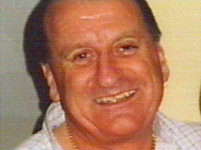
This was the first familial search in Great Britain in which the suspect was apprehended and convicted of the crime. In the early morning hours on March 21, 2003, Mr. Michael Little, a 53-year-old truck driver, was driving his truck on a highway in Surrey, when he drove beneath an overpass. A brick was thrown from the overpass and crashed through his windshield. It hit Mr. Little in his chest and caused fatal damage to the heart. Before Mr. Little died, he was able to bring his truck to a stop on the side of the road.

Michael Little

Law enforcement analyzed the blood on the brick and found two DNA profiles, one of Mr. Little and one of another unknown individual. That evening, before the brick was thrown from the overpass, a car had been burglarized in the same town. The burglar could not get the car started and he left his blood at the scene.

The police were able to extract a full DNA profile and it matched the DNA profile on the brick which killed Mr. Little. The profile was run through the DNA Database, but no match was found.

However, the DNA analysis established that the offender was caucasian. A police profiler looked at the details of the crime, and suggested that he was under the age of 35. Also, Surrey police believed the killer lived locally and so authorities performed a DNA dragnet screen involving 350 people from the surrounding area who volunteered to give samples. But still no match was found.

Law enforcement then decided to perform a familial search of white males under the age of 35 living in Surrey or Hampshire. Twenty five people with similar DNA were located including a relative of the suspect whose DNA matched 16 of 20 DNA markers. They interviewed the relative and discovered that he had a 19-year-old brother, Craig Harman, who lived where the crime had occurred. Harman gave his DNA voluntarily and confessed. In April, 2004, Craig Harman pleaded guilty to manslaughter and was sentenced to 6 years.

Case where Familial Searching was used in the USA: It was an unfinished slice of pizza that led to the identification of Lonnie David Franklin Jr. as the prime suspect in the Grim Sleeper murder investigation. But the pizza was just the final clue leading to his arrest. The key break in the investigation, intermittently conducted over 25 years, came when investigators found a close — but not perfect — match between the DNA recovered at multiple crime scenes and a man being held in a California prison. Such a near-match strongly indicated that the person wanted by police was a close relative of the man in prison, and police soon focused on the man’s father, Lonnie Franklin. They put him under surveillance, obtained his discarded pizza and found that his DNA matched that recovered at a Grim Sleeper crime scene.

Click here for more stories on cases solved by Familial Searching.

Vanessa

The best Valentine’s Day Invite

Fri, Feb 18th, 2011

A strange topic you may think? Especially, if like me, you are not a fan of Valentine’s Day and all that it encompasses. However, having just landed in Cape Town from a trip to JHB last week, I received a call from General Phahlane, the Divisional Commissioner of the Forensic Lab, requesting that I please come and present at a Strategic Planning and Management Session in Mpumalanga on Monday, 14 Feb 2011. Now you can understand why it was the best Valentine’s Day invitation I have ever received!

Gen Phahlane & Col. Lindie Traut from the FSL with Willie Scholtz from the CJS

The purpose of the work session was to review the progress made with revamping the CJS and to plan the way forward with regard to the CJS within the FSL for the 2011/2012 fiscal Year. The work session formed part of the ongoing strategic planning processes currently underway in the Forensic Science Division, which is being spearheaded by its new head, Gen. Phahlane. My brief was to present to the Planning Team, The DNA Project’s overview of where we believe funds allocated to the FSL by the CJSR (Criminal Justice System Review – which you will recall was given R3bn over 3yrs) would be best spent in the forthcoming fiscal year, with a view to expanding the National DNA Database.  What a brief! The Planning Team consisted not only of the Divisional Head of the FSL, but the head of the FSL and the LCRC and all of its top management staff. It was an honour to be invited to be part of this Session and an opportunity finally to be able to present all of our hard work and research over the last few years to such a focused group of people. In addition, the new management team of the FSL are one of the most hard working and dynamic group of people I have come across and they view the work of The DNA Project as an integral part of the review process, as opposed to an opposition group with a hidden agenda. For the first time in many years, Carolyn (who accompanied me to the session) and I felt that the tides had changed insofar as the FSL recognising the critical role it plays in the resolution of crime in South Africa.

The hour long presentation I gave was received with enthusiasm and most importantly, support. In a nutshell, The DNA Project believe the 3 key areas which need to be addressed are (1) Legislation (2) Capacity and (3) Awareness. The below slide, which come out of my presentation, captures the “How” we believe this can be achieved in SA:

Re: Legislation – despite the PC dragging their heels and insisting on embarking upon their overseas trip, the FSL are two steps ahead and have already implemented extensive strategies to increase their capacity by commencing on the building of two more National Labs in KZN and the Eastern cape – by de-centralising the Pretroia Lab, it will mean that provincial cases do not clog up the Pretoria process lines and obviously will result in an increase in samples loaded. Hand in hand with this development, they believe fully in training and awareness at the crime scene. As such, we have their support in promoting the Forensic Hons degree they have helped us develop and they will be participating in lectures at the tertiary institutions offering this course. As the FSL capacity increases, they envisage employing at least another 750 analysts and as such, the more skilled analysts they can employ the better. These strategies will ensure that the FSL’s implementation plan which they will need to prepare for Parliament, will have substance and vision, two elements key to the successful execution of the DNA Bill, when passed.

But mot importantly, where The DNAP and the FSL can work together in the most critical way, is through awareness at the crime scene – I spoke of a chain being as strong as its weakest link – and this means that with all of the above strategies in place, all will fail if we cannot collect the DNA evidence left at the crime scene by the perpetrator/s. We only have one chance to do this, and this is where the public/private partnership comes into play. If we can continue to create DNA Awareness and the importance of crime scene preservation amongst the general public and sectors of the community such as within private security companies, paramedics, trauma centres, justice and schools, then they can implement training and awareness amongst Crime Scene Examiners and first responding police officers.

This leads me to my final point which is that the expansion of the National DNA Database in South Africa, and its use as a crime intelligence tool (i.e. investigations driven by DNA, rather than DNA being considered simply a piece of evidence) requires the interplay between Justice, SAPS and the FSL and….the public – which is us, The DNA Project and YOU!

All of the above points made sense to the Planning Team and even more encouraging is that they were excited about some of the ideas I presented. We left the following day with renewed hope and energy and trust in our hearts, that the new management team are going to get it right and not just right, but they are willing and able to take DNA and its potential as an evidentiary tool, to a new level in SA. The Planning Session continued over the next couple of days, and we look forward to hearing how the 2011/2012 fiscal year is going to unfold. I have no doubt that it will be a space worth watching out for….

It was indeed a “Happy Valentine’s Day” – let’s hope in this case, all our dreams come true!

Vanessa

Envisioning the future of DNA in SA – someone has to do it!

Thu, Jan 27th, 2011

We all know that DNA technologies have radically reshaped the role of forensics in police work throughout the world – well, that is everywhere perhaps but here in SA, where we unarguably need it the most. Even small amounts of blood, saliva, or other biological materials left at a crime scene can now lead to the identification or elimination of a suspect. Genetic evidence is being used both to convict perpetrators and to exonerate people who were wrongfully convicted on less reliable evidence, including scores of people on death row in the USA. We all know this. It is a fact. It is the future of successful police work, and that is why I am not ready nor willing to take off my gloves in our fight to make our Government recognise this all important fact.

Every now and again, I wake up and think – what is the point? All those nay-sayers who previously told me and still tell me – you will never get anywhere with our Government would love to prove me wrong and say, ‘I told you so’…  But the point is, this is inevitable – just as the cell phone has become an indispensable instrument in every SA’s life, so too will the power of DNA and its use in resolving crime, become an indispensable tool in SA’s fight against crime. So when I heard this week that the Portfolio Committee have yet again postponed their overseas tour of the UK and Canada to , and I quote, “our winter”, ie July 2011, my initial reaction was despondency – but then I realised that they are simply delaying the inevitable – whilst they manipulate dates to ensure that their overseas trip at least falls within the European and Canadian summer (a much more pleasant time to journey, you will agree), we need to ensure that all the groundwork must continue to ensure that once that legislation is in place, we are ready for it:

1. DNA AWARENESS – this is critical, because unless we are aware that DNA is all prevalent on a crime scene, that crucial evidence will be lost, and of no further use. This applies to every officer, (be it police or security guard) paramedic or member of the public and as such, we will continue to embark upon our National DNA Awareness Campaign which offers free workshops to all these sectors as well as schools, community centres and trauma centres. The more people who know about the power of DNA, how to preserve it and how it can be used to link serial offenders to their crimes and ultimately prosecute them, the better.

2. DNA CAPACITY – we need to support our Forensic Labs, as the new legislation, when passed, will require a large amount of samples to be processed if our DNA Database is to be used as an intelligent database. To this end, more Universities need to take up our offer of hosting a Forensic DNA course at their institution (we have developed a Forensic Hons course which we provide to Universities free of charge), so that we have more qualified Forensic Analysts entering the labs. We also need to support the idea of allowing private DNA labs to assist the state forensic labs, certainly in the beginning, to process more samples to enter onto the DNA Database. This is an accepted practice all over the world, and in a country which is plagued by backlogs, there is no reason not to implement this system in SA.

3. GENETIC JUSTICE & THE LAW! – without proper legislation in place, convicted offenders remain free to leave prison without having had their DNA profile entered onto the DNA Database; the current DNA Database remains unregulated due to inadequate and outdated legislation attempting to define this area of the law; serial rapists and murderers remain at large and undetected because our Database cannot be utilised as an intelligent Database without proper legislation allowing it to be used as such. We need to put pressure on the Portfolio Committee to get a move on and review the DNA Bill, because one more delay will render their stated intentions to pass the Bill untruthful, without substance and against the will of the SA people.

Our plan for 2011 therefore is to rigourously promote DNA Awareness in the first part of the year. To this end we have a media plan and funding to help us spread this crucial awareness (remember DNA CSI!?) on a national basis. When the PC return from their overseas trip, ready, we trust to finally concentrate on actually reviewing the legislation, we hope that there will be a groundswell of South African’s fully aware of why DNA and its use in Forensics needs to form part of this country’s crime fighting strategy.

Let us know if you want us to host a free DNA Awareness workshop or lecture at your organisation, school, community centre, trauma centre or security company – simply email Maya at maya@dnaproject.co.za or call (021) 418-0647.

with thanks

Vanessa

Forensic Science Service (UK) to be closed down

Tue, Jan 11th, 2011
DNA profile in lab

The government-owned Forensic Science Service, which employs 1,600 people, is to be wound up – closing by 2012.

Crime Reduction Minister James Brokenshire said the Birmingham-based service was losing about £2m a month and could run out of money in January.

Its evidence was key to the arrest of serial killer Steve Wright and in the case of missing girl Shannon Matthews.

The Prospect union, representing 1,000 FSS professionals, said the decision made a “mockery” of the justice system.

Its deputy general secretary Mike Clancy said: “Cost will now determine justice in the UK. The government is putting its faith in an untested market to deliver forensic science at a time when it has never been more important to the detection of crime.”

The decision would “destroy a world-class body” that was envied by international police and lead to an over-emphasis in profits in the sector which could threaten the quality of the science, he added.

However, the FSS had faced increased private-sector competition for police contracts and Mr Brokenshire told the BBC this was enabling forces to achieve greater efficiency.

“They’re seeing better turnaround in terms of the way in which forensics are being processed,” he said.

In a statement, the FSS said spending cuts meant police forces had less money for forensics consultancy and were increasingly taking such work in-house.

It said it had raised such concerns to the Home Office and was “disappointed” that they had not been addressed before the winding-up decision was made.

In a written statement to MPs, Mr Brokenshire had said it was vital for the government to take “clear and decisive action” to sort out the FSS after it got into “serious financial difficulty”.
“The police have advised us that their spend on external forensic suppliers will continue to fall over the next few years as forces seek to maximise efficiencies in this area,” he said.

“We have therefore decided to support the wind-down of the FSS, transferring or selling off as much of its operations as possible.”

DNA evidence gathered by the FSS led to the arrest of Ipswich murderer Wright within days of the discovery of his fifth victim.

The company also provided toxicology evidence against Karen Matthews and Michael Donovan which helped ensure their conviction for kidnapping and drugging schoolgirl Shannon.

BBC legal affairs analyst Clive Coleman said the FSS had enjoyed significant successes and had a good reputation, despite one or two failures such as the Damilola Taylor murder inquiry where DNA evidence was initially missed.

He said private enterprise, which already made up 40% of the market, should expand to fill the gap left behind by the FSS.

However, there were concerns that commercial pressures might mean additional tests and analysis were no longer done.

“There is a concern from some lawyers that perhaps if you’re simply looking at the bottom line… critical evidence might not come to light and be produced in court,” he added.

The FSS has been government-owned since 2005.

Scotland is unaffected by the announcement, as the Scottish Police Services Authority is responsible, while Nothern Ireland has its own agency, Forensic Science Northern Ireland.

Article courtesy of http://www.bbc.co.uk/news/uk-11989225

Meeting the new General of the FSL

Thu, Dec 2nd, 2010

I was in Johannesburg and Pretoria today where I met with two very interesting and influential people – one government, one private.

The first, General Phahlane, is the newly appointed head of the Forensic Science Lab [which, remember, consists of 6 different forensic divisions, only one of which is Biology (DNA)]. The General has taken over from the former Div. Commissioner, Piet du Toit and has a very different managerial style to his predecessor. For one, he promotes opens lines of communications, and whilst I sense that he is definitely not a man to be crossed, he encourages support and input so long as it is constructive. The General acknowledges that the current system is far from perfect, however, he is tackling the issues head on and apparently, transparently, and from all accounts runs a very tight ship too. His random appearance within the lab at any given time, certainly ensures that the people working there are on the ball at all times, and I believe this approach has enabled him to boast substantial inroads into the DNA backlog,  that is constantly being raised as an issue. The General believes that NGO’s have a critical role to play in making fundamental changes in SA – more importantly, he supports our objectives and has a particular interest in the DNA Awareness campaign we have embarked upon throughout South Africa as he too understands how vital a part the preservation of crime scene evidence plays. His passion to eradicate crime  in SA is palpable, and I truly look forward to watching the changes I believe he is going to make in developing a strategy to expand the DNA Database in SA. It is abundantly clear that he comprehends and embraces the significant role a criminal intelligence database plays in SA as opposed to simply a DNA Database, and that more profiles = a more powerful database for crime detection and resolution, but ultimately prevention.

Vanessa Lynch with General Phahlane and Colonel Shezi at the Pretoria FSL

Vanessa Lynch with General Phahlane and Colonel Shezi at the Pretoria FSL

I was also greatly relieved to hear that Colonel Shezi, who attended the meeting, will be accompanying the Portfolio Committee on their overseas study tour to the UK and Canada next year. The General confirmed that at least her trip had been approved, so I am assuming from that information, that the remainder of the Committee members must too have a final agenda. This reinforces the statement made by MP, Annelize van Wyk on SABC1 (“It’s your Right”) last week, that the tour has been scheduled for late January 2011 and that deliberations on the DNA Bill would commence in February on their return; and… that she anticipated that it would be finalised by mid 2011. We won’t of course be holding our breath that they will stick to those timelines, as reviewing legislation is not a cut and dry affair, BUT, at least it is finally being publicly spoken about and is now openly on the agenda.

The other person I met was the CEO of the Security Industry Alliance. The concept of introducing DNA Awareness Training as an industry standard amongst all private security personnel was discussed. In other words, we host “Train the Trainer” workshops so that all security companies are enabled to incorporate DNA Awareness Training as part of their standard crime scene management training. I am putting together a proposal this week which will formulate a plan to incorporate this type of awareness from the top down. This is very exciting, as it may well mean, that DNA Awareness becomes part and parcel of all first responding officers’ training — again, it underlies the objective we are very passionate about — and that is that you only have a limited opportunity to preserve crime scene evidence, without which all the laws in the land and fancy labs are rendered meaningless.

Let’s hope that our simple acronym DNA CSI becomes as well known in SA as Coca Cola!

Vanessa