Archive for the ‘Forensic Career’ Category


A Disappointing Debate – what do you think?

Mon, May 16th, 2011

For those of you who may have attended the debate at UCT last week Wednesday, you may share my frustration and disappointment insofar as my adversary failed, in my opinion, to address the issues at hand which were: the societal and ethical implications of a National DNA Database in South Africa. Whilst I commend Ms Naidoo for standing up against police brutality and corruption, this was not the topic of debate for that evening, nor was it in any way relevant to the question of which types of profiles should be held on a DNA database and why.

Poonitha Naidoo, Vanessa Lynch & Carolyn Hancock

Poonitha Naidoo, Vanessa Lynch & Carolyn Hancock

As such,  I believe we lost a valuable opportunity for serious, logical and rational debate over an issue which may have far reaching consequences in South Africa . The problem is, to date, no-one seems to be able to come forward and present an argument against the implementation of a criminal intelligence DNA database, which makes any sense at all.

Whilst I admit that I may be biased in favour of the value of a DNA Database for crime resolution (in conjunction with the vast majority of countries in the world with developed DNA Databases!), I am not unfamiliar nor insensitive to some of the privacy concerns of human rights groups. It must also be noted that the DNA Project concedes that the actual DNA reference sample (as opposed to the DNA profile) should be destroyed once a full DNA profile has been obtained and, that there should be an exit mechanism in place to expunge profiles which have not resulted in a conviction following arrest.

As I see it, there are five areas of concern amongst civil rights activists, which I raised for argument in the debate, namely:
1. WHETHER A DNA SAMPLE AND ITS PROFILE SHOULD BE KEPT ON A DATABASE,
2. AND FOR HOW LONG;
3. HOW THESE SAMPLES SHOULD BE OBTAINED FROM INDIVIDUALS;
4. WHETHER THE PRESENCE OF A DNA PROFILE ON A DATABASE REPRESENTS AN INVASION OF PRIVACY;  AND
5. HOW WE SHOULD BALANCE THESE CONFLICTING INTERESTS WITHIN THE FRAMEWORK OF OUR CONSTITUTIONAL RIGHTS IN SA.

In the first place we must ensure that we differentiate between a DNA sample and a DNA profile. 
The physical sample consists of the bodily substance collected from a crime scene or person; the DNA profile is the digitized information that is stored electronically on the Database. Whilst the sample holds the genetic profile, once a DNA profile has been obtained, the DNA sample can be destroyed, provided that it is not a crime scene sample which is evidence and must be kept in the same way as other crime scene evidence.
Of note is that the DNA markers which make up the digital profile in South Africa, are specifically chosen for forensic use because they do not reveal any details about age, ethnicity, race, appearance or medical conditions. You therefore cannot link a DNA profile to an individual’s medical history nor does it point to genetic disorders or susceptibilities. In fact a mughsot tells you more about the person than a DNA profile; as too does your id number. If then we concede that the physical sample is not retained, but only the digital profile, and if access and use to it is strictly confined, then the intrusion into privacy is not particularly grave, while the societal gains in solving and deterring appalling crimes in South Africa through a criminal intelligence database, are very significant.

Vanessa Lynch debating at UCT last week

Vanessa Lynch debating at UCT last week

My second point was in relation to the way in which a sample is collected. Currently, due to the interpretation of the 1977 Criminal Procedures Act, a registered nurse or medical practitioner has to take a full vial blood to generate a sample for DNA analysis. The draft DNA bill calls for the collection of a simple cheek swab/pin prick by a police officer.  No country in the world mandates that samples be taken by blood or medical personnel – Why? It is exceedingly expensive, dangerous and scientifically unnecessary and it has certainly never been challenged as unconstitutional or invasive. Ms Naidoo perceives this act however as a grave invasion of privacy. But, I argue that the mere act of taking of samples from suspects is a reasonable and  proportionate response to serious crime.

Given that this technology is here to stay, as a crucial means of solving crimes, the question is… who should be on the database and why? It is generally agreed, that convicted offenders and crime scene profiles should be retained. The main argument is then around the retention of such material in cases where a suspect is subsequently acquitted or the charge is discontinued….. which leads us to the next point…

Our contention is that there should exist a retention framework for profiles which do not result in a conviction. In the pivotal case of S vs Marper – The European Courts of Human Right forced a change of policy in England that the holding of a DNA profiles from persons regardless of outcome of arrest was disproportionate – a retention framework was proposed which is still being debated.
 Whilst the value of retained profiles from suspects who were subsequently acquitted has been shown to be considerable, there is no other country which allows a blanket retention policy of such profiles, but a retention framework makes sense.
Significantly, in South Africa, a recently passed law allows searching across all the fingerprint databases – HANIS, E-NATIS and AFIS. If we accept that the fingerprint is a unique identifier, just as the DNA profile is, then we are currently already allowing supposedly ‘innocent’ fingerprints to be searched for the purpose of generating a hit or match. We must remember that the presence of a fingerprint on a database does not constitute a criminal record – it is for reference and comparative purposes only. If a hit is generated then it is considered a LEAD in the investigation – it is not an automatic guilty verdict as many seem to suggest. With the high rate of recidivism in SA, it may be proportionate to consider a retention framework whereby a profile is kept for a specified period (in the draft Bill, 5 years has been proposed) after which, if there is no further arrest during that time, it is automatically expunged.

Perhaps then Civil liberties activists seem mostly opposed to the development of a national database on the grounds that state officials might somehow be able to abuse ordinary citizens by using the data that would be contained in it? The argument that information can be abused pre-supposes that the DNA profiles reveal genetic information which is commercially valuable. This is untrue. It is simply a unique identifier. There is no realistic way I can think of in which a government can abuse a Database nor has any case ever been reported of this occurring. But perhaps some reader out there has different views on this, and if so, I would be interested in hearing them. Moreover, the draft Bill provides for strict safeguards and penalties to ensure that DNA profiles are used only for the purpose related to the detection of crime, the investigation of an offence or the conduct of a prosecution.

If a Database is assiduously maintained and strictly controlled in order to strengthen our Criminal Justice System (CJS) and help our forces of law apprehend and prosecute habitual offenders, then we should support the expansion and development of this crime fighting tool in a country which is being held to ransom by a small minority of criminals.

The last point brings me to duty of the State to protect the public from crime. However, it is recognised that in doing so, the State also needs to protect certain ethical values such as liberty, autonomy, privacy, informed consent and equality. Sometimes these obligations conflict and then a balance must be struck between the right to privacy and the right to safety and security. In appropriate circumstances, some of these rights need to be restricted in the public interest and to protect the rights of others.  Legislation should therefore seek to find an adequate balance between the interests of society and the interests of the individual. If we agree that the purpose of the CJS is to permit everyone to go about their daily lives without fear of harm to person or property, then surely it is in everyone’s interest that serious crime should be properly investigated and prosecuted.  As one of the most important obligations of the state is to protect the rights of its citizens, a DNA Database does this and this more than makes up for any minor privacy rights violated by mandatory DNA databasing. In other words, freedom of action has to be restricted in appropriate circumstances – i.e. the response of the state to take action to prevent people from killing or harming one another will inevitably involve some restriction of freedom of action. Laws by their very nature do this (restrict freedom of action) but are in place to ensure that the greater good is achieved.

My final point on the issue is a Utilitarian  one – in other words, what is the VALUE of the science? 
In a country which has one of the highest crime rates,  lowest conviction rates and highest rate of recidivism in the world- the value of the science, in this case, the DNA database,  is very, very high.
So, let us not sacrifice the good for the perfect – if we put proper safeguards in place and maximise the full potential of this powerful investigative tool, we will be doing a good thing – which surely is an aim worthy of pursuit?

What do you think?

Vanessa


Meet some of our team

Tue, May 3rd, 2011

We recently appointed another trainer and assistant in the KZN area, Grant Godsmark, a  young and dynamic Genetic Hons graduate from UCT, with a passion for DNA. This weeks blog entry has been written by Grant and looks at the reasons why he thinks we urgently need DNA

Grant Godsmark at a Training Workshop

Grant Godsmark at a Training Workshop

legislation in this country. As it stands, the latest information indicates that the Portfolio Committee’s “study tour” of the UK and Canadian DNA labs  is scheduled for the 24th of June 2011 to the 10th of July 2011. That is a total of 15 days. Wow. Is that not a long time to spend viewing two labs? How do you feel about this? Read how we feel! Let us know what you think, by posting a comment or writing on our Facebook page.

This is what one reader had to say:

“I am working for a Rape Centre, every day I see the people these ministers are suppose to protect. Small children are raped by serial rapist who roam the streets and cannot be arrested or sentenced because the DNA project does not get the urgent attention it needs!!! Why is everything in this great country of us backwards, is money and freedom to do as they wish so important to our leaders. PLEASE wake up and start looking after the innocent!!!!”

Here is what Grant has to say:

Is South Africa missing out on the benefits of using DNA to help apprehend criminals?

We have all watched an episode of CSI, or other detective programs, and so we know how important evidence left at the crime scene can be. In every episode the criminal is caught with the help of evidence (often DNA) left at the scene of the crime. Although things happen really fast on TV….. all the forensic techniques that are shown are actually used by police to help solve crime. In reality DNA profiling is successfully used every day by police forces all over the world to apprehend and convict criminals. So you may be wondering: What are we doing in South Africa?

Well, you will be pleased to know that we have state of the art equipment that is used to analyze DNA evidence found at crime scenes. This equipment includes the world’s first fully automated system that can be used for high volume forensic DNA analysis.  But despite access to this amazing technology, South Africa is not maximizing the use of DNA as a forensic tool. One reason for this is that we do not have the necessary legislation to allow our police force to use the technology to its full potential. In South Africa current legislation does not allow for all people arrested, or convicted of a crime to have their DNA profile placed on the National DNA Database of South Africa (NDDSA). If this was to happen then when police do not have a suspect, and the perpetrator is been previously arrested or convicted, a comparison between the crime scene profile and profiles on the database may provide police with a suspect. Amendments to the current legislation have been proposed which will allow for all evidence collected at crime scenes to be compared to the database and possible suspects to be identified. Click here for more details.

This system is currently being used in USA, UK and Europe with great results. In the UK, in 70% of cases where DNA profiles from crime scene evidence are loaded onto the database, there is a match with someone already on the database. This means that when police have no suspect they are given a lead in the case just by searching the database. Imagine how effective this would be in South Africa where most of our criminals have committed many crimes – we just need to get them on the database once!

Unfortunately, the parliamentary committee tasked with considering the changes in legislation has been dragging their heels since 2009. In July they plan on going on a fact finding mission to the UK and Canada before considering implementing this legislation. This despite the fact that DNA databases have been effectively used by these countries since 1995. So…..why should South Africans, who live with some of the highest crime rates in the world, not be able to benefit from this incredible technology? The reason is simply that a small piece of legislation is the final hurdle keeping us from convicting the people responsible for crimes like murder and rape in South Africa. We all need to fight for this legislation to be passed as soon as possible so that we can make criminals accountable for their actions. We need everyone to support the proposed changes in legislation and to put pressure onto the committee to pass the amendment. All South Africans will then be able to breathe a little easier knowing that if something happens to our loved ones, the SAPS will finally be able to do the best they can to apprehend these criminals.

Written by Grant Godsmark

Exciting DNA Forensic Events happening this week (22-25 Mar 2011)

Tue, Mar 22nd, 2011

There are a number of Forensic DNA Conferences and Seminars being held throughout South Africa this week (22-25 Mar 2011) which I will be attending, ranging from Victim Empowerment through the use of DNA to establishing a DNA Innocence Project in SA to unleashing the power of a criminal intelligence DNA database in SA. All of these seminars and events will be of value and interest to anyone involved in DNA forensics in SA .

I have posted details of all these on the events page – click here for more information.

Hope to see you there!

with thanks

Vanessa


Jack Mogale: Serial rapist and murderer, how did DNA evidence assist in getting him convicted?

Fri, Mar 18th, 2011

Jack Mogale: Serial rapist and murderer, how did DNA evidence assist in getting him convicted?

In a case where there were so many victims, especially rape victims, you would expect more DNA evidence. However, DNA evidence was only used to link Mogale to four of the victims, two of which were murdered.

The one victim, a prostitute who was raped and murdered by Mogale, had a condom discovered nearby the body from which DNA evidence was collected which matched Mogale. Two of the other victims had vaginal and cervical swabs for DNA evidence taken matching Mogale as well. A fourth victim who was bludgeoned, raped and then left unconscious in the open veld for 24 hours had a vaginal swap at the hospital which produced DNA evidence matching Mogale.

He was found guilty on 52 of the 61 charges brought against him, these included 16 murders, 9 kidnappings, 2 thefts and 2 robberies with aggravating circumstances.

When Mogale was being led down to the court cells, he is quoted as saying, “In life you face challenges and this is just one of them. I did not commit the crimes they say I committed. Even now, I still maintain my innocence”, but DNA evidence doesn’t lie.

For more of the full story please follow these links.

http://www.sowetanlive.co.za/news/2011/03/17/serial-rapist-to-be-sentenced

http://www.news24.com/SouthAfrica/News/West-End-killer-awaits-sentencing-20110316

New Rape Kits will help crack Rape Cases

Mon, Mar 14th, 2011

The forensic DNA laboratory of the University of the Western Cape (UWC) has been researching and developing a forensic kit to identify male perpetrators in rape cases. We heard last week that this kit has now been fully developed and is available to Crime Labs to help crack rape cases, specially in those cases where a victim has been raped by more than one perpetrator. 

The UWC research team looked at local regions with high gene variability between individuals, and the kit they developed was thoroughly tested against South Africa’s different population groups. It had been proved that the kit would help increase the conviction rate in rape cases. The police currently use kits that analyse both female and male DNA but this can be confusing and cluttered. This kit will supplement those in use and will support circumstantial evidence.

The kit, developed under the leadership of Professor Sean Davidson together with Dr Eugenia dâ Amato, is similar to those made in America and Europe, but is more accurate with South Africa’s population groups, UWC’s An Wentzel said.

How does it work?

The test isolates information of the Y-chromosome — which is present only in males — and is able to narrow down suspects to the range of father, son or brother.

Why is it such a ‘breakthrough’?

Because father passes his Y-chromosome to his son, meaning that they have identical Y-chromosomes and therefore they would both be suspects based on Y-DNA evidence. Davidson said forensic pathologists could now pick up male DNA more easily in a rape case, and this made it more useful in identifying the rapist, with investigators able to narrow down the range of possible aggressors. “The technology is also good at excluding innocent men,” he said.

Davidson said the test takes “a matter of days”. However, it would not eliminate the time taken in the administration of DNA processing.
The findings and results have been welcomed by the international forensics community and has been hailed by UWC  as a giant step forward for justice and rape victims in South Africa.

14 March 2011

‘Familial Searching’ – an explanation

Tue, Mar 1st, 2011

“While the sins of the father should not be visited on the son, the sins of the son should not go unpunished because the sins of the father are ignored….”

We posted a poll on the website last week asking whether Familial DNA searching should be allowed in SA? [Familial Searching .i.e. a process by which an unidentified DNA profile is run through the state’s DNA data-bank looking not for an exact match but for a close match that would identify a family member of an unidentified perpetrator and could point in the direction of potential suspects.]

Notwithstanding the fact that only 2 people have voted so far, it has caused quite a lot of debate on Facebook! As such, I though that I should use this opportunity to open the debate further, as Familial Searching for criminal intelligence as well as the identification of unidentified bodies is being used in more and more countries throughout the world. It is however not without controversy, and whilst in some cases has been used to identify a previously unknown suspect of a violent crime, it has sparked some debate. This is not to say that the information presented here represents the views of The DNA Project – I am simply going to try and present the facts as objectively as possible and hopefully receive some constructive comment on the subject from some of you who read this blog.

In those countries where Familial Searching is allowed, it is important to remember that searches are only conducted on the National DNA Databanks which hold the profiles of previously convicted offenders, crime scene profiles and arrestees who have not yet been convicted.  Furthermore, a ‘hit’ when conducting a familial search,  does not mean that that person is the suspect – it is simply an investigative lead which may lead the police to the actual suspect who committed the crime. A DNA  Database for Criminal Intelligence is NOT a population database – in other words it is a database containing profiles of crime scene samples and convicted offenders & arrestees and not the general population. A familial search on a National DNA Database will therefore extend the size and reach of the DNA database to effectively include the parents, children and siblings of the offenders and arrestees whose DNA profiles are already stored in databases.

“Familial searching” is being used in some countries for efficient identification of possible crime suspects when traditional investigative efforts fail. Crime laboratories benefit from searching not just for perfect matches, but also for close ones, when trying to connect DNA from unsolved crimes to the DNA of known offenders whose DNA profiles are held in a national database. Because relatives share common DNA profiles, close matches can implicate family members as possible crime suspects.

As experience with familial searching increases, more and more countries will probably embrace the technique. And as they do, so does the need to create policies that will ensure both efficiency and accuracy in case selection, statistical thresholds and follow-up testing and investigation.

For those of you who would like to read more on the subject, the following report compiled by Sophie Rushton (July 2010) for the Australian & New Zealand Policing Advisory Agency looks at both the positive and negative aspect of Familial Searching and Predictive DNA Testing for Forensic Purposes: Report Familial Searching and Predictive DNA Testing 2010.

Case Solved – The Bloody Brick: Craig Harman

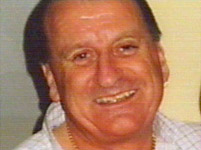
This was the first familial search in Great Britain in which the suspect was apprehended and convicted of the crime. In the early morning hours on March 21, 2003, Mr. Michael Little, a 53-year-old truck driver, was driving his truck on a highway in Surrey, when he drove beneath an overpass. A brick was thrown from the overpass and crashed through his windshield. It hit Mr. Little in his chest and caused fatal damage to the heart. Before Mr. Little died, he was able to bring his truck to a stop on the side of the road.

Michael Little

Law enforcement analyzed the blood on the brick and found two DNA profiles, one of Mr. Little and one of another unknown individual. That evening, before the brick was thrown from the overpass, a car had been burglarized in the same town. The burglar could not get the car started and he left his blood at the scene.

The police were able to extract a full DNA profile and it matched the DNA profile on the brick which killed Mr. Little. The profile was run through the DNA Database, but no match was found.

However, the DNA analysis established that the offender was caucasian. A police profiler looked at the details of the crime, and suggested that he was under the age of 35. Also, Surrey police believed the killer lived locally and so authorities performed a DNA dragnet screen involving 350 people from the surrounding area who volunteered to give samples. But still no match was found.

Law enforcement then decided to perform a familial search of white males under the age of 35 living in Surrey or Hampshire. Twenty five people with similar DNA were located including a relative of the suspect whose DNA matched 16 of 20 DNA markers. They interviewed the relative and discovered that he had a 19-year-old brother, Craig Harman, who lived where the crime had occurred. Harman gave his DNA voluntarily and confessed. In April, 2004, Craig Harman pleaded guilty to manslaughter and was sentenced to 6 years.

Case where Familial Searching was used in the USA: It was an unfinished slice of pizza that led to the identification of Lonnie David Franklin Jr. as the prime suspect in the Grim Sleeper murder investigation. But the pizza was just the final clue leading to his arrest. The key break in the investigation, intermittently conducted over 25 years, came when investigators found a close — but not perfect — match between the DNA recovered at multiple crime scenes and a man being held in a California prison. Such a near-match strongly indicated that the person wanted by police was a close relative of the man in prison, and police soon focused on the man’s father, Lonnie Franklin. They put him under surveillance, obtained his discarded pizza and found that his DNA matched that recovered at a Grim Sleeper crime scene.

Click here for more stories on cases solved by Familial Searching.

Vanessa

The best Valentine’s Day Invite

Fri, Feb 18th, 2011

A strange topic you may think? Especially, if like me, you are not a fan of Valentine’s Day and all that it encompasses. However, having just landed in Cape Town from a trip to JHB last week, I received a call from General Phahlane, the Divisional Commissioner of the Forensic Lab, requesting that I please come and present at a Strategic Planning and Management Session in Mpumalanga on Monday, 14 Feb 2011. Now you can understand why it was the best Valentine’s Day invitation I have ever received!

Gen Phahlane & Col. Lindie Traut from the FSL with Willie Scholtz from the CJS

The purpose of the work session was to review the progress made with revamping the CJS and to plan the way forward with regard to the CJS within the FSL for the 2011/2012 fiscal Year. The work session formed part of the ongoing strategic planning processes currently underway in the Forensic Science Division, which is being spearheaded by its new head, Gen. Phahlane. My brief was to present to the Planning Team, The DNA Project’s overview of where we believe funds allocated to the FSL by the CJSR (Criminal Justice System Review – which you will recall was given R3bn over 3yrs) would be best spent in the forthcoming fiscal year, with a view to expanding the National DNA Database.  What a brief! The Planning Team consisted not only of the Divisional Head of the FSL, but the head of the FSL and the LCRC and all of its top management staff. It was an honour to be invited to be part of this Session and an opportunity finally to be able to present all of our hard work and research over the last few years to such a focused group of people. In addition, the new management team of the FSL are one of the most hard working and dynamic group of people I have come across and they view the work of The DNA Project as an integral part of the review process, as opposed to an opposition group with a hidden agenda. For the first time in many years, Carolyn (who accompanied me to the session) and I felt that the tides had changed insofar as the FSL recognising the critical role it plays in the resolution of crime in South Africa.

The hour long presentation I gave was received with enthusiasm and most importantly, support. In a nutshell, The DNA Project believe the 3 key areas which need to be addressed are (1) Legislation (2) Capacity and (3) Awareness. The below slide, which come out of my presentation, captures the “How” we believe this can be achieved in SA:

Re: Legislation – despite the PC dragging their heels and insisting on embarking upon their overseas trip, the FSL are two steps ahead and have already implemented extensive strategies to increase their capacity by commencing on the building of two more National Labs in KZN and the Eastern cape – by de-centralising the Pretroia Lab, it will mean that provincial cases do not clog up the Pretoria process lines and obviously will result in an increase in samples loaded. Hand in hand with this development, they believe fully in training and awareness at the crime scene. As such, we have their support in promoting the Forensic Hons degree they have helped us develop and they will be participating in lectures at the tertiary institutions offering this course. As the FSL capacity increases, they envisage employing at least another 750 analysts and as such, the more skilled analysts they can employ the better. These strategies will ensure that the FSL’s implementation plan which they will need to prepare for Parliament, will have substance and vision, two elements key to the successful execution of the DNA Bill, when passed.

But mot importantly, where The DNAP and the FSL can work together in the most critical way, is through awareness at the crime scene – I spoke of a chain being as strong as its weakest link – and this means that with all of the above strategies in place, all will fail if we cannot collect the DNA evidence left at the crime scene by the perpetrator/s. We only have one chance to do this, and this is where the public/private partnership comes into play. If we can continue to create DNA Awareness and the importance of crime scene preservation amongst the general public and sectors of the community such as within private security companies, paramedics, trauma centres, justice and schools, then they can implement training and awareness amongst Crime Scene Examiners and first responding police officers.

This leads me to my final point which is that the expansion of the National DNA Database in South Africa, and its use as a crime intelligence tool (i.e. investigations driven by DNA, rather than DNA being considered simply a piece of evidence) requires the interplay between Justice, SAPS and the FSL and….the public – which is us, The DNA Project and YOU!

All of the above points made sense to the Planning Team and even more encouraging is that they were excited about some of the ideas I presented. We left the following day with renewed hope and energy and trust in our hearts, that the new management team are going to get it right and not just right, but they are willing and able to take DNA and its potential as an evidentiary tool, to a new level in SA. The Planning Session continued over the next couple of days, and we look forward to hearing how the 2011/2012 fiscal year is going to unfold. I have no doubt that it will be a space worth watching out for….

It was indeed a “Happy Valentine’s Day” – let’s hope in this case, all our dreams come true!

Vanessa

Envisioning the future of DNA in SA – someone has to do it!

Thu, Jan 27th, 2011

We all know that DNA technologies have radically reshaped the role of forensics in police work throughout the world – well, that is everywhere perhaps but here in SA, where we unarguably need it the most. Even small amounts of blood, saliva, or other biological materials left at a crime scene can now lead to the identification or elimination of a suspect. Genetic evidence is being used both to convict perpetrators and to exonerate people who were wrongfully convicted on less reliable evidence, including scores of people on death row in the USA. We all know this. It is a fact. It is the future of successful police work, and that is why I am not ready nor willing to take off my gloves in our fight to make our Government recognise this all important fact.

Every now and again, I wake up and think – what is the point? All those nay-sayers who previously told me and still tell me – you will never get anywhere with our Government would love to prove me wrong and say, ‘I told you so’…  But the point is, this is inevitable – just as the cell phone has become an indispensable instrument in every SA’s life, so too will the power of DNA and its use in resolving crime, become an indispensable tool in SA’s fight against crime. So when I heard this week that the Portfolio Committee have yet again postponed their overseas tour of the UK and Canada to , and I quote, “our winter”, ie July 2011, my initial reaction was despondency – but then I realised that they are simply delaying the inevitable – whilst they manipulate dates to ensure that their overseas trip at least falls within the European and Canadian summer (a much more pleasant time to journey, you will agree), we need to ensure that all the groundwork must continue to ensure that once that legislation is in place, we are ready for it:

1. DNA AWARENESS – this is critical, because unless we are aware that DNA is all prevalent on a crime scene, that crucial evidence will be lost, and of no further use. This applies to every officer, (be it police or security guard) paramedic or member of the public and as such, we will continue to embark upon our National DNA Awareness Campaign which offers free workshops to all these sectors as well as schools, community centres and trauma centres. The more people who know about the power of DNA, how to preserve it and how it can be used to link serial offenders to their crimes and ultimately prosecute them, the better.

2. DNA CAPACITY – we need to support our Forensic Labs, as the new legislation, when passed, will require a large amount of samples to be processed if our DNA Database is to be used as an intelligent database. To this end, more Universities need to take up our offer of hosting a Forensic DNA course at their institution (we have developed a Forensic Hons course which we provide to Universities free of charge), so that we have more qualified Forensic Analysts entering the labs. We also need to support the idea of allowing private DNA labs to assist the state forensic labs, certainly in the beginning, to process more samples to enter onto the DNA Database. This is an accepted practice all over the world, and in a country which is plagued by backlogs, there is no reason not to implement this system in SA.

3. GENETIC JUSTICE & THE LAW! – without proper legislation in place, convicted offenders remain free to leave prison without having had their DNA profile entered onto the DNA Database; the current DNA Database remains unregulated due to inadequate and outdated legislation attempting to define this area of the law; serial rapists and murderers remain at large and undetected because our Database cannot be utilised as an intelligent Database without proper legislation allowing it to be used as such. We need to put pressure on the Portfolio Committee to get a move on and review the DNA Bill, because one more delay will render their stated intentions to pass the Bill untruthful, without substance and against the will of the SA people.

Our plan for 2011 therefore is to rigourously promote DNA Awareness in the first part of the year. To this end we have a media plan and funding to help us spread this crucial awareness (remember DNA CSI!?) on a national basis. When the PC return from their overseas trip, ready, we trust to finally concentrate on actually reviewing the legislation, we hope that there will be a groundswell of South African’s fully aware of why DNA and its use in Forensics needs to form part of this country’s crime fighting strategy.

Let us know if you want us to host a free DNA Awareness workshop or lecture at your organisation, school, community centre, trauma centre or security company – simply email Maya at maya@dnaproject.co.za or call (021) 418-0647.

with thanks

Vanessa

Forensic Science Service (UK) to be closed down

Tue, Jan 11th, 2011
DNA profile in lab

The government-owned Forensic Science Service, which employs 1,600 people, is to be wound up – closing by 2012.

Crime Reduction Minister James Brokenshire said the Birmingham-based service was losing about £2m a month and could run out of money in January.

Its evidence was key to the arrest of serial killer Steve Wright and in the case of missing girl Shannon Matthews.

The Prospect union, representing 1,000 FSS professionals, said the decision made a “mockery” of the justice system.

Its deputy general secretary Mike Clancy said: “Cost will now determine justice in the UK. The government is putting its faith in an untested market to deliver forensic science at a time when it has never been more important to the detection of crime.”

The decision would “destroy a world-class body” that was envied by international police and lead to an over-emphasis in profits in the sector which could threaten the quality of the science, he added.

However, the FSS had faced increased private-sector competition for police contracts and Mr Brokenshire told the BBC this was enabling forces to achieve greater efficiency.

“They’re seeing better turnaround in terms of the way in which forensics are being processed,” he said.

In a statement, the FSS said spending cuts meant police forces had less money for forensics consultancy and were increasingly taking such work in-house.

It said it had raised such concerns to the Home Office and was “disappointed” that they had not been addressed before the winding-up decision was made.

In a written statement to MPs, Mr Brokenshire had said it was vital for the government to take “clear and decisive action” to sort out the FSS after it got into “serious financial difficulty”.
“The police have advised us that their spend on external forensic suppliers will continue to fall over the next few years as forces seek to maximise efficiencies in this area,” he said.

“We have therefore decided to support the wind-down of the FSS, transferring or selling off as much of its operations as possible.”

DNA evidence gathered by the FSS led to the arrest of Ipswich murderer Wright within days of the discovery of his fifth victim.

The company also provided toxicology evidence against Karen Matthews and Michael Donovan which helped ensure their conviction for kidnapping and drugging schoolgirl Shannon.

BBC legal affairs analyst Clive Coleman said the FSS had enjoyed significant successes and had a good reputation, despite one or two failures such as the Damilola Taylor murder inquiry where DNA evidence was initially missed.

He said private enterprise, which already made up 40% of the market, should expand to fill the gap left behind by the FSS.

However, there were concerns that commercial pressures might mean additional tests and analysis were no longer done.

“There is a concern from some lawyers that perhaps if you’re simply looking at the bottom line… critical evidence might not come to light and be produced in court,” he added.

The FSS has been government-owned since 2005.

Scotland is unaffected by the announcement, as the Scottish Police Services Authority is responsible, while Nothern Ireland has its own agency, Forensic Science Northern Ireland.

Article courtesy of http://www.bbc.co.uk/news/uk-11989225

Feedback from Interpol DNA User’s Conference

Wed, Sep 29th, 2010

This time last week I was sitting at the Interpol Headquarters in Lyon, France listening to the Chief of the USA FBI CODIS Unit talk about International DNA Exchange methods. This was only one of approximately 35 fascinating presentations delivered by representatives from over 50 countries. As you may well imagine, participating in a conference of this magnitude was extraordinary, and the value of being able to interact with the other representatives: priceless. A special mention of thanks needs to go to our generous sponsor, The Open Society Foundation for South Africa, which enabled us to attend this incredible conference.

Members of the Interpol DNA Monitoring Expert Group at the Conference

The keynote speaker was a highly respected Australian Forensic Scientist by the name of Dr Simon Walsh. Dr Walsh is the Co-ordinator of the Australian DNA Database who spoke about, amongst other topics, ‘New Technologies & Techniques in the 21st Century use of DNA‘. We heard about what he termed “the triumvirate of interests” which is the critical interplay between the police,  forensic scientists and the justice system. If you absent one of these 3 critical components when trying to implement a DNA Criminal Intelligence Database, the success of any DNA Database will fail to reach its expected outcome. This needs to be considered in great detail in a country such as South Africa where both our justice system and SAPS are fraught with problems. These challenges however are not unique to South Africa, and the way in which other countries have dealt with this, is by the implementation of a DNA Expansion Board or body of people, represented by the various departments as well as ethicists and parliamentarians and any other group relevant to that administration who collectively oversee the development of the DNA Database. I have spoken about this type of overseeing body on many occasions in the past and still believe that this approach would work well in South Africa, which in fact has the benefit of an already established DNA database as well as a functional forensic laboratory. Whether the Portfolio Committee reviewing our current legislation recognises this critical requirement however, is yet to be seen….

Carolyn and I arriving at Interpol Headquarters on the first day of the Conference

On a more complex level, and probably more relevant to countries such as the UK, Australia and the USA who have developed and utilised their DNA Databases successfully as criminal intelligence tools, Dr Walsh’s presentation went further to explore an inferential model for DNA database performance using data from major national DNA database programs. The parameters that optimise desirable database outputs (matches) were isolated and discussed, as was his approach for maximizing financial efficiency and minimizing ethical impact brought about by the successful implementation of DNA databases. Dr Walsh’s research takes important steps toward identifying measures of performance for forensic DNA database operations and should you wish to know more about his formulas he has developed to measure DNA Database outcomes, feel free to email me at info@dnaproject.co.za and I will send you the paper he has recently written on this subject.

What struck me most at the conference was the extent to which the majority of the countries government’s represented at the conference, were willing to put in whatever resources were required to establish and maximise the effectiveness of their respective DNA databases. It was also sobering to see how seriously they took crime and in some countries a stolen car was considered to be headline news and worthy of 24/7 resources to catch the perpetrator. You can just imagine the reaction that followed my presentation where I described the current situation in South Africa, spoke about my experience when my father was murdered and ended off the presentation with the VUKA ad which highlights the severity of crime in our country. To say that the audience was left in stunned silence at the end of my presentation, is perhaps an

Vanessa Lynch presenting at the Interpol DNA Conference

understatement. I think we all know how de-sensitized we are to crime in South Africa, but when people came up to me afterwards and told me they had literally choked-up during my presentation, I realised how far removed we really are and how dangerous this can be as it moves us into a place of acceptance of an absolutely, unequivocally unacceptable situation. And people kept asking me – but WHY doesn’t your government do something about this and WHY is it taking so long to pass this legislation which will convert all those unprocessed rape kits I had shown them, into a DNA profile which may lead the CSI’s to the perpetrator to STOP them from re-offending. And the best question: but WHY doesn’t your government or your parliamentarians RESPECT these victims and future victims of crime enough in your country to do something about this? Yes, WHY indeed?

Carolyn and Vanessa in the Interpol Headquarter's Garden

On the other end of the scale we heard from the United Arab Emirates (UAE) how they  have been given 1 BILLION US$ to implement a population database in their region – their crime rate, I recall, is something in the region of 950 reported crimes over 10 years?! The reason – to prevent future crime from occurring! Whilst this is not a realistic option in most parts of the world, it sparked serious debate amongst the audience in respect of the value and ethical considerations a population database would bring about. For those not familiar with the term ‘population database’, it simply means that instead of focusing on putting the criminal population on the DNA database, it puts the entire country’s DNA profiles on the database which creates a larger reference pool for matching purposes when a crime occurs and a DNA profile is uplifted from a crime scene. Theirs is going to be the first population database in the world, and what I found most significant was that legislation was not listed as a ‘requirement’ for its implementation! This is because, and I quote, “Legislation will be taken care of by the Minister of Interior”! No questions asked.

We thoroughly enjoyed listening to some fascinating case studies presented by different countries over the course of the 3 days, all of which obviously showed how DNA was used to track the perpetrator of the crime, and in some cases, from as far back as the early 1970’s and throughout the world using Interpol’s International DNA Database.

We were also shown a very exciting new website called the  “Forensic DNA World Map Project “. The World Map Project provides forensic scientists, criminal justice professionals and lawmakers with access to the policy, legislative, legal and technical knowledge-base of the countries throughout the world that have operational DNA database programs.  It is a free service but is limited to those individuals pursuing the information for the purpose of developing and refining forensic DNA policy.  One can apply for a password and if given, those Users may request additional country-specific information, such as enabling legislation, DNA database reports, presentations, statistical data, technical standards and media.  The WMP can also connect users with forensic DNA databasing leaders throughout the world.  I am going to suggest to our Parliamentary Researcher that she apply for a password to access this database and that she disseminate same to members of our Portfolio Committee – this is probably what they really need to look at to inform themselves of  International Best Practice (IBP) – in other words, an armchair tour of the World’s DNA Policies may be all they need to learn the most about how this technology is being implemented internationally and the issues and challenges each of those countries has had to deal with!! I have looked at the site and it is arguably one of the most informative portals when it comes to looking at IBP in this arena.

There was also a lot of discussion around familial searching, which is used mostly for DVI (Disaster Victim Identification) but in a more regulated way, to establish a link to the perpetrator when they pick up a familial link on the DNA database between a crime stain and a profile which already exists on the database. Judge Arthur Tompkins presented some very sound and objective arguments on both the legal and ethical issues surrounding the use of familial searching. Having listened to these discussions I think it would be prudent for South Africa to consider inserting a provision in our new DNA legislation to regulate this area of the database.

Judge Tompkins also provided us with very valuable insight into the lessons learned from the outcome of the contentious S & Marper cases which reached the European Human Rights Courts. I so wished even ONE member of our Portfolio Committee could have been there to participate in these discussions, as they have stated on more than one occasion that they are considering the outcome of this case in the review of our legislation.  This case you may recall, centres around the retention of ‘innocent’ profiles on the database where the person is subsequently acquitted or the case is dropped. What you may find interesting, is that “S” is a person named Smith who was a minor at the time of his DNA profile being loaded onto the database. Smith was not subsequently convicted. But how ironic is this: Smith was recently linked to a crime he was found guilty of committing – how? Because his DNA profile found on the crime scene matched his ‘innocent’ profile on the database….

Carolyn and I left the Interpol Headquarters last Friday with our heads full of new information and new ideas; new friends and allies and more importantly renewed motivation. We received such wonderful support for the work we are doing in South Africa – everyone found it completely unique (and not surprisingly, somewhat strange!) that a non-government organisation was necessary in a country like South Africa where we provide DNA awareness, grass roots training, skills development and most importantly a public voice to try and convince the relevant governmental powers of the value of a criminal intelligence DNA database. Be that as it may, we will continue with our mission to ‘fight crime with science’, and whilst we are not advocating that this is the ‘silver bullet’ to resolve crime, it certainly remains a mystery as to why South Africa has not leapt at the opportunity to more fully use this phenomenal technology where accountability for crime has not yet been achieved.

Should you wish to know anything further about the conference, feel free to email me on info@dnaproject.co.za

Vanessa