Author Archive


Victim Empowerment and DNA Forensics Conference

Tue, Apr 5th, 2011

Victim Empowerment and DNA forensics, hosted by Inqaba Biotechnology at the University of the Western Cape on the 25th March 2011

Vanessa and I attended the Victim Empowerment and DNA Forensics workshop on the 25th of March 2011. Throughout the morning’s proceedings there was undeniably one fact that we, as South Africans need to take into account: DNA, as a criminal investigation tool, is versatile.

(1)               DNA is and has been successfully used in exonerating the innocent in post-conviction DNA testing. Professor Keith Findley is currently the President of the Innocence Network and the co-director of the Wisconsin Innocence Project.

For those of you who are unaware, the Innocence Project a “national litigation (of the United States of America) and public policy organization dedicated to exonerating wrongfully convicted individuals through DNA testing and reforming the criminal justice system to prevent future injustice” [Innocence Project, www.innocenceproject.org].

The Innocence Network is an international organization which has 63 affiliated projects worldwide (granted, the majority are Innocence projects within the USA). Australia, Canada, Ireland, New Zealand and the United Kingdom are the only non-US members [www.innocencenetwork.org].

While the stats are not available in South Africa, here are stats Prof Findley provided us:

–   Number of people exonerated by post-convictions across the United States = 267 (17 from death row)

–   Average number of years in prison before released = 13

13 years. 13 years an innocent man is in prison while the perpetrator is walking the streets potentially committing more crimes. I don’t know about you, but that needs to change.

(2)               The legal perspectives on forensic DNA and DNA databases was discussed by Mr Chris Asplen, a United States Federal prosecutor who was also pivotal in the commission for the use of DNA in evidence.

As Mr Asplen so eloquently stated, regardless of the power of DNA evidence (and it is a powerful investigative tool), it is only useful when the law allows you to do something with it.

There are currently 50 DNA databases around the world and every country has only ever increased the size of their databases. Ultimately, the aim of a national DNA database is to identify the guilty, prevent crime and protect the innocent. When DNA is found in a crime scene, in the United Kingdom, there is a hit (DNA profile from the crime scene matched a DNA profile on the database) between 68-72% of the time.

We heard inspired investigative techniques from range of countries. For example, DNA of a perpetrator was successfully extracted from a mosquito in Finland resulting in the criminal being convicted, in another case, DNA was extracted from blood on the beak of a bird thereby identifying the murderer.

The key messages from Mr Asplen, for South Africa were the following:

–   “Do not sacrifice the good for the perfect”

Do not wait until the South African Police Force and forensic team can do “CSI” type cases. We need to start protecting victims now, we need to have a foundation to work on. That foundation is the implantation of routine DNA profiling of arrestees.

–   The measure of our success with this technology and whether we chose to do it, is counted in peoples’ lives.

(3)               From victim to survivor to victims advocate. Mrs Lavinia Masters spoke to us about her personal battle after a brutal rape at 13.

Though semen was taken from Mrs Masters, the case to identify her perpetrator was closed. Her life, after the rape, was a nightmare – she lived in constant fear, and withdrew into herself.

It was not until the Denver police department launched the Sexual Assault Cold Case Program that Mrs Masters’ case was taken through DNA profiling and her rapist was identified. Kevin Glenn, was already in jail, serving time for a multitude of crimes he committed after Mrs Masters.

Life after knowing her rapist was behind bars allowed Mrs Masters to become a DNA advocate (if DNA profiling was done on the semen taken from Mrs Masters, the number of crimes Kevin Glenn committed before being arrested would be far fewer than what he did) and a victims advocate, helping those who were in her position move on.

(4)               Power of DNA databases and humanitarian issues. Ed Huffine from BODE technologies spoke to us on additional uses for DNA databases.

From identifying missing persons, tracing ancestral lines and even searching mass graves and charred remains in Bosnia, DNA profiling has a pivotal role in these investigations.

Overall the workshop was an enlightening, inspiring morning and cemented, yet again, that we as South Africans have to do all we can, as citizens to get the DNA bill passed.

DNA is the way we need to go. Yes, DNA is no silver bullet but it is a robust investigative tool. Think about the number of lives we could’ve saved by convicting serial rapists and murderers years ago. Think about the victims we could have saved. Science never lies.

Kusha

Is our Portfolio Committee waiting to board their 5 Star Junket Ship?

Tue, Mar 29th, 2011

It was reported in the Sunday Times this weekend (27 March 2011), that a delegation of 49 government officials, including eight ministers and deputy ministers, flew business class to New York on a two-week ‘junket’, yet failed to attend many of the sessions of the United Nations gender summit where they were supposed to represent South Africa.

The Sunday Times reported that:
* The delegates stayed at five-star hotels including the exclusive Ritz Carlton on Central Park, where prices start at R5500 a night;
* Some of the Ministers failed to attend any of the sessions;
* A return business class ticket on SAA costs R81104 per person); and
* The South African mission at the UN complained to the Department of International Relations about the size of the delegation.

It was further reported by a government official who was part of the trip, that most members of the South African delegation who did not make it into the conference venue spent their time shopping and clubbing in New York.

So why does this concern me?
Because the Portfolio Committee for Police who have been delaying reviewing our DNA Bill for the last year are preparing to board their own junket to both Canada and the UK on their mission which they have called a “Study Tour”. It remains to be seen what in fact they will be studying, because as we all know so well, the best way to study international trends and developments on any subject these days, is from the comfort of your computer chair. And with the plethora of information available on the internet today, you can access every single country’s policy on DNA databasing, their legislation as well as any other information relevant to the development, expansion and use of their database for criminal intelligence. Trust me, I have done just that and have all the documents to prove it!

If it is forensic DNA laboratories they need to see – this too can be seen, ‘live’ in Pretoria, where international delegates in fact visit South Africa to see the automated robotic system we have in our state of the art DNA Forensic Lab.

And as for the size of the delegation embarking on the planned study tour, I believe the majority of the Portfolio Committee (15 members), a Parliamentary Researcher, two legal advisors, 3 members of the Forensic Services, and possibly a further 9 delegates who have expressed an interest on joining the junket, will be making the trip.

Excuse me if I sound bitter – but having heard a series of international experts talk on the issue of DNA Databases and its phenomenal use in crime fighting last week (all of which seminars were held here in South Africa and I noted, none of which even one member of the Portfolio bothered to attend, albeit they were free and local!), I cannot understand why the reviewing of this important piece of legislation pivots on the need for possibly 30 government officials to embark on a 10 day international trip to look at two forensic labs, which are doing precisely the same thing we are dong here in South Africa? Each day they delay getting on with the job of actually reviewing the DNA Bill, more victims are being murdered and raped because their perpetrators haven’t been at the very least identified or that evidence documented on a database which could lead investigators to apprehend the real suspect.

Why do we accept this? How can we allow 15 people and their delegation of henchmen to stand between justice and the fate of literally thousands of victims and future victims?
Those government officials are afterall accountable to us, may we remind them – and as such, I think that they owe us an official and detailed explanation as to why they deem it necessary to embark on the study tour, who they will be taking with them and why, when they actually intend making this trip, what they expect to see and learn in those two countries and at what cost to us, the tax payers – the cost to the victims is clear – it will in the meantime  be counted in lives lost and damaged.

Madame Chairman of the Portfolio Committee for Police: are you able to answer these few very simple questions?

We await to hear from you.

Vanessa

Exciting DNA Forensic Events happening this week (22-25 Mar 2011)

Tue, Mar 22nd, 2011

There are a number of Forensic DNA Conferences and Seminars being held throughout South Africa this week (22-25 Mar 2011) which I will be attending, ranging from Victim Empowerment through the use of DNA to establishing a DNA Innocence Project in SA to unleashing the power of a criminal intelligence DNA database in SA. All of these seminars and events will be of value and interest to anyone involved in DNA forensics in SA .

I have posted details of all these on the events page – click here for more information.

Hope to see you there!

with thanks

Vanessa


Jack Mogale: Serial rapist and murderer, how did DNA evidence assist in getting him convicted?

Fri, Mar 18th, 2011

Jack Mogale: Serial rapist and murderer, how did DNA evidence assist in getting him convicted?

In a case where there were so many victims, especially rape victims, you would expect more DNA evidence. However, DNA evidence was only used to link Mogale to four of the victims, two of which were murdered.

The one victim, a prostitute who was raped and murdered by Mogale, had a condom discovered nearby the body from which DNA evidence was collected which matched Mogale. Two of the other victims had vaginal and cervical swabs for DNA evidence taken matching Mogale as well. A fourth victim who was bludgeoned, raped and then left unconscious in the open veld for 24 hours had a vaginal swap at the hospital which produced DNA evidence matching Mogale.

He was found guilty on 52 of the 61 charges brought against him, these included 16 murders, 9 kidnappings, 2 thefts and 2 robberies with aggravating circumstances.

When Mogale was being led down to the court cells, he is quoted as saying, “In life you face challenges and this is just one of them. I did not commit the crimes they say I committed. Even now, I still maintain my innocence”, but DNA evidence doesn’t lie.

For more of the full story please follow these links.

http://www.sowetanlive.co.za/news/2011/03/17/serial-rapist-to-be-sentenced

http://www.news24.com/SouthAfrica/News/West-End-killer-awaits-sentencing-20110316

New Rape Kits will help crack Rape Cases

Mon, Mar 14th, 2011

The forensic DNA laboratory of the University of the Western Cape (UWC) has been researching and developing a forensic kit to identify male perpetrators in rape cases. We heard last week that this kit has now been fully developed and is available to Crime Labs to help crack rape cases, specially in those cases where a victim has been raped by more than one perpetrator. 

The UWC research team looked at local regions with high gene variability between individuals, and the kit they developed was thoroughly tested against South Africa’s different population groups. It had been proved that the kit would help increase the conviction rate in rape cases. The police currently use kits that analyse both female and male DNA but this can be confusing and cluttered. This kit will supplement those in use and will support circumstantial evidence.

The kit, developed under the leadership of Professor Sean Davidson together with Dr Eugenia dâ Amato, is similar to those made in America and Europe, but is more accurate with South Africa’s population groups, UWC’s An Wentzel said.

How does it work?

The test isolates information of the Y-chromosome — which is present only in males — and is able to narrow down suspects to the range of father, son or brother.

Why is it such a ‘breakthrough’?

Because father passes his Y-chromosome to his son, meaning that they have identical Y-chromosomes and therefore they would both be suspects based on Y-DNA evidence. Davidson said forensic pathologists could now pick up male DNA more easily in a rape case, and this made it more useful in identifying the rapist, with investigators able to narrow down the range of possible aggressors. “The technology is also good at excluding innocent men,” he said.

Davidson said the test takes “a matter of days”. However, it would not eliminate the time taken in the administration of DNA processing.
The findings and results have been welcomed by the international forensics community and has been hailed by UWC  as a giant step forward for justice and rape victims in South Africa.

14 March 2011

‘Familial Searching’ – an explanation

Tue, Mar 1st, 2011

“While the sins of the father should not be visited on the son, the sins of the son should not go unpunished because the sins of the father are ignored….”

We posted a poll on the website last week asking whether Familial DNA searching should be allowed in SA? [Familial Searching .i.e. a process by which an unidentified DNA profile is run through the state’s DNA data-bank looking not for an exact match but for a close match that would identify a family member of an unidentified perpetrator and could point in the direction of potential suspects.]

Notwithstanding the fact that only 2 people have voted so far, it has caused quite a lot of debate on Facebook! As such, I though that I should use this opportunity to open the debate further, as Familial Searching for criminal intelligence as well as the identification of unidentified bodies is being used in more and more countries throughout the world. It is however not without controversy, and whilst in some cases has been used to identify a previously unknown suspect of a violent crime, it has sparked some debate. This is not to say that the information presented here represents the views of The DNA Project – I am simply going to try and present the facts as objectively as possible and hopefully receive some constructive comment on the subject from some of you who read this blog.

In those countries where Familial Searching is allowed, it is important to remember that searches are only conducted on the National DNA Databanks which hold the profiles of previously convicted offenders, crime scene profiles and arrestees who have not yet been convicted.  Furthermore, a ‘hit’ when conducting a familial search,  does not mean that that person is the suspect – it is simply an investigative lead which may lead the police to the actual suspect who committed the crime. A DNA  Database for Criminal Intelligence is NOT a population database – in other words it is a database containing profiles of crime scene samples and convicted offenders & arrestees and not the general population. A familial search on a National DNA Database will therefore extend the size and reach of the DNA database to effectively include the parents, children and siblings of the offenders and arrestees whose DNA profiles are already stored in databases.

“Familial searching” is being used in some countries for efficient identification of possible crime suspects when traditional investigative efforts fail. Crime laboratories benefit from searching not just for perfect matches, but also for close ones, when trying to connect DNA from unsolved crimes to the DNA of known offenders whose DNA profiles are held in a national database. Because relatives share common DNA profiles, close matches can implicate family members as possible crime suspects.

As experience with familial searching increases, more and more countries will probably embrace the technique. And as they do, so does the need to create policies that will ensure both efficiency and accuracy in case selection, statistical thresholds and follow-up testing and investigation.

For those of you who would like to read more on the subject, the following report compiled by Sophie Rushton (July 2010) for the Australian & New Zealand Policing Advisory Agency looks at both the positive and negative aspect of Familial Searching and Predictive DNA Testing for Forensic Purposes: Report Familial Searching and Predictive DNA Testing 2010.

Case Solved – The Bloody Brick: Craig Harman

This was the first familial search in Great Britain in which the suspect was apprehended and convicted of the crime. In the early morning hours on March 21, 2003, Mr. Michael Little, a 53-year-old truck driver, was driving his truck on a highway in Surrey, when he drove beneath an overpass. A brick was thrown from the overpass and crashed through his windshield. It hit Mr. Little in his chest and caused fatal damage to the heart. Before Mr. Little died, he was able to bring his truck to a stop on the side of the road.

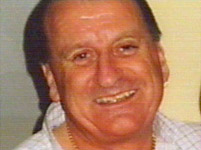
Michael Little

Law enforcement analyzed the blood on the brick and found two DNA profiles, one of Mr. Little and one of another unknown individual. That evening, before the brick was thrown from the overpass, a car had been burglarized in the same town. The burglar could not get the car started and he left his blood at the scene.

The police were able to extract a full DNA profile and it matched the DNA profile on the brick which killed Mr. Little. The profile was run through the DNA Database, but no match was found.

However, the DNA analysis established that the offender was caucasian. A police profiler looked at the details of the crime, and suggested that he was under the age of 35. Also, Surrey police believed the killer lived locally and so authorities performed a DNA dragnet screen involving 350 people from the surrounding area who volunteered to give samples. But still no match was found.

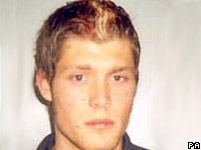
Law enforcement then decided to perform a familial search of white males under the age of 35 living in Surrey or Hampshire. Twenty five people with similar DNA were located including a relative of the suspect whose DNA matched 16 of 20 DNA markers. They interviewed the relative and discovered that he had a 19-year-old brother, Craig Harman, who lived where the crime had occurred. Harman gave his DNA voluntarily and confessed. In April, 2004, Craig Harman pleaded guilty to manslaughter and was sentenced to 6 years.

Case where Familial Searching was used in the USA: It was an unfinished slice of pizza that led to the identification of Lonnie David Franklin Jr. as the prime suspect in the Grim Sleeper murder investigation. But the pizza was just the final clue leading to his arrest. The key break in the investigation, intermittently conducted over 25 years, came when investigators found a close — but not perfect — match between the DNA recovered at multiple crime scenes and a man being held in a California prison. Such a near-match strongly indicated that the person wanted by police was a close relative of the man in prison, and police soon focused on the man’s father, Lonnie Franklin. They put him under surveillance, obtained his discarded pizza and found that his DNA matched that recovered at a Grim Sleeper crime scene.

Click here for more stories on cases solved by Familial Searching.

Vanessa

Forensic Science and the Future of Policing in South Africa

Mon, Feb 28th, 2011

The following article was written by Andrew Faull, Researcher, Crime and Justice Programme, ISS Pretoria Office with the assistance of The DNA Project:

When South African President Jacob Zuma delivered his State of the Nation address on the 10th of February 2010 he made a fleeting but important reference to crime and policing. He said the government would continue “to increase the capacity and effectiveness of the police, in particular the detective services, forensic analysts and crime intelligence.” His statement echoes those we have heard from the Minister of Police, Nathi Mthethwa, over the past year, in which he has promised to “fight crime smarter and tougher”.  While most South Africans celebrate the “tough” approach to crime, it is the “smart” element that deserves more attention. Indeed, each of the three areas mentioned by the President suggest a shift toward an intelligence and science driven approach to criminal investigations.

One of the most important developments in forensic investigation in recent decades has been the increased use of DNA evidence in investigating and prosecuting criminal offenses. In South Africa, lack of legislation and training has meant the South African Police Service (SAPS) has yet to fulfill its potential in this area, but 2011 may see this all change.

DNA, or deoxyribonucleic acid, can be thought of as the fingerprint of the 21st century. Carried in every human cell, it is an unchanging signature that remains with us throughout our lives. Everywhere we go, unless we take extreme precaution, we leave trails of our DNA. With access to a global DNA database, a well-resourced forensic investigator could theoretically visit any location and ascertain exactly who had recently been there. The potential of this for criminal investigations is vast. It includes:

  • Linking suspects to crime scenes;
  • Excluding suspects and exonerating those incorrectly found guilty;
  • Linking suspects to multiple crime scenes using a DNA trail;
  • Allowing for “cold hits” where someone who is not a suspect is linked to a crime scene through a DNA database;
  • Deterring would-be offenders from committing crime for fear of rapid detection.

An important premise behind intelligence driven policing is that a small percentage of offenders often account for a large percentage of all crimes. It has also been shown that many criminals re-offend, and that career criminals often start out by committing minor offenses which increase in severity over time. Connecting a variety of otherwise disconnected crimes is relatively simple using DNA analysis, providing sufficient DNA evidence is gathered from all crime scenes, crime victims, and criminal offenders, and stored in a DNA database. It is not difficult to imagine how DNA could revolutionise criminal investigations in South Africa.

Since 2004 the DNA Project, a non-governmental organisation based in Cape Town and Durban, has been advocating for the comprehensive use of DNA gathering and analysis in crime detection and prevention.  In order for this to occur, it has pushed for a number of key developments.

First among these is the passing of the Criminal Law (Forensic Procedures) Amendment Bill of 2009. The passing of the Bill, which was drafted in 2008 and is waiting parliamentary review, would signify a breakthrough for advocates of forensic investigations. In particular the Bill:

  • Addresses the use of DNA profiles for criminal intelligence purposes
  • Allows for the upgrading of the existing DNA database by allowing police to take and keep DNA samples from all arrestees and all those already convicted.
  • Provides a framework for the management and administration of a DNA database to include all suspect and crime scene profiles.

The importance of this legislation cannot be overstated. Current legislation does not allow criminal justice officials to gather DNA samples from suspects or convicted offenders, despite the process being relatively non-invasive (a swab on the inner cheek or a finger prick). Under the new Act the gathering of samples will be allowed, so that over time a national database will emerge against which all crime scene DNA evidence can be checked. In the United Kingdom, which now has a database of over 5 million individuals, this has lead to over 40 000 match reports a year – including 15 murder, 45 rape and 2500 vehicle, property and drug related matches a month. These are leads in cases where there may be no other clues. When a DNA profile from a crime scene is loaded onto the UK’s database there is a 52% chance of an immediate match to a suspect, this increases to 68% if the profile is left on the database for 12 months as offenders are likely to re-offend within a year. Such capacity in South Africa could substantially assist the work of SAPS detectives.

Perhaps the second most important change being called for by the DNA Project is that all South African citizens, particularly those of emergency service (EMS) workers and police be conscientised about DNA as it relates to crime scenes. Although all crime scenes should be sealed off until a crime scene investigator arrives, this often does not occur. The presence of people at a crime scene is detrimental for the gathering of both traditional and forensic evidence. Each police official, member of the public or EMS worker who enters a crime scene is likely to leave traces of their own DNA in the form of hair, skin cells, cigarette butts, saliva and other organic material. It is vital that such people are aware that they must not walk around the scene of a crime so that DNA does not become contaminated.

Although South Africa needs to train more forensic investigators and analysts, the SAPS is already well-positioned to embrace DNA-based investigations.  In 2006 South Africa opened the world’s first fully automated robotic DNA analyses facility which has the capacity to analyse 800 DNA samples every day. There are two other manual analysis labs in the country, and the SAPS is in the process of establishing additional labs in each province. However, there is a need for improvements to the SAPS policy on DNA analysis. At present priority analysis is conducted on samples requested by state prosecutors and only where there is a suspect. This does not allow for “cold hits” in cases where there may not be a suspect.

DNA alone does not solve cases, but it certainly can make certain investigations, such as rape, infinitely simpler. In the UK, when confronted with DNA evidence of their presence at a crime scene, 82% of suspects confess to the crime immediately reducing the need for a full trial. While forensic science brings with it significant ethical questions and is sure to be challenged, it has largely stood up to ethical and scientific challenges in jurisdictions where it is widely used.

South Africa is on the cusp of a criminal investigation revolution. It is now up to parliament to pass, the legislation required to significantly alter the landscape of criminal investigation and prosecution in South Africa.


See also the following article which appeared on http://www.businessday.co.za/articles/Content.aspx?id=135709

SA is unlikely to pass DNA legislation any time soon

Expert believes SA passing legislation making it possible to take DNA samples from suspects or convicted offenders will not happen in the near future.

ERNEST MABUZA
Published: 2011/02/28 06:33:03 AM

LEGISLATION making it possible to collect DNA samples from suspects or convicted offenders is unlikely to be passed by Parliament any time soon.

Andrew Faull, researcher at the Institute for Security Studies, is among those who are asking what happened to the legislation, originally part of a 2009 bill.

He considers one of the most important developments in forensic investigation in recent decades to be the increased use of DNA evidence in investigating and prosecuting criminal offences.

Democratic Alliance MP and member of the portfolio committee on police Dianne Kohler Barnard said on Friday that the committee would first need to go on a study tour to Canada and the US to investigate international best practice on DNA databases before considering introducing such legislation in SA.

“We need to speak from an informed perspective,” she said. The visit is scheduled to take place in July.

As legislation now stands in SA, criminal justice officials are not allowed to gather DNA samples, despite the process being relatively noninvasive.

Mr Faull said an important premise behind intelligence- driven policing was that a small percentage of offenders often accounted for a large percentage of all crimes.

The DNA database against which all crime-scene DNA evidence can be checked will help police in ensuring that they not only have a “tough” approach to crime, but also have smarter ways to investigate.

The building of the DNA database was originally part of the Criminal Law (Forensic Procedures) Amendment Bill of 2009 that also included the collection and storage of fingerprints, palm prints, footprints and photographic images for the purpose of fighting crime.

However, the portfolio committee on police decided to pass two separate laws — one for fingerprint collection and another for the DNA database.

The law governing the collection and storage of fingerprints was passed last year.

Ms Kohler Barnard said interested parties had raised several concerns about the building of a DNA database, ranging from fear that DNA could be stolen and used for profiling, to concern about the invasion of privacy.

She agreed that in the case of rape, it was often one person committing multiple rapes before finally being caught by police.

Mr Faull said it had also been shown that many criminals re- offended, and that career criminals often began by committing minor offences which increased in severity over time.

“Connecting a variety of otherwise disconnected crimes is relatively simple using DNA analysis, providing sufficient evidence is gathered from all crime scenes, crime victims and offenders, and stored in a DNA database,” Mr Faull said.

“It is not difficult to imagine how DNA could revolutionise criminal investigations in SA.”

Ms Kohler Barnard said one of the main challenges in the proposed legislation was to ensure the DNA database was secure, and that there was no opportunity for someone to remove a DNA sample and place it fraudulently at a crime scene to implicate someone else.

mabuzae@bdfm.co.za

The best Valentine’s Day Invite

Fri, Feb 18th, 2011

A strange topic you may think? Especially, if like me, you are not a fan of Valentine’s Day and all that it encompasses. However, having just landed in Cape Town from a trip to JHB last week, I received a call from General Phahlane, the Divisional Commissioner of the Forensic Lab, requesting that I please come and present at a Strategic Planning and Management Session in Mpumalanga on Monday, 14 Feb 2011. Now you can understand why it was the best Valentine’s Day invitation I have ever received!

Gen Phahlane & Col. Lindie Traut from the FSL with Willie Scholtz from the CJS

The purpose of the work session was to review the progress made with revamping the CJS and to plan the way forward with regard to the CJS within the FSL for the 2011/2012 fiscal Year. The work session formed part of the ongoing strategic planning processes currently underway in the Forensic Science Division, which is being spearheaded by its new head, Gen. Phahlane. My brief was to present to the Planning Team, The DNA Project’s overview of where we believe funds allocated to the FSL by the CJSR (Criminal Justice System Review – which you will recall was given R3bn over 3yrs) would be best spent in the forthcoming fiscal year, with a view to expanding the National DNA Database.  What a brief! The Planning Team consisted not only of the Divisional Head of the FSL, but the head of the FSL and the LCRC and all of its top management staff. It was an honour to be invited to be part of this Session and an opportunity finally to be able to present all of our hard work and research over the last few years to such a focused group of people. In addition, the new management team of the FSL are one of the most hard working and dynamic group of people I have come across and they view the work of The DNA Project as an integral part of the review process, as opposed to an opposition group with a hidden agenda. For the first time in many years, Carolyn (who accompanied me to the session) and I felt that the tides had changed insofar as the FSL recognising the critical role it plays in the resolution of crime in South Africa.

The hour long presentation I gave was received with enthusiasm and most importantly, support. In a nutshell, The DNA Project believe the 3 key areas which need to be addressed are (1) Legislation (2) Capacity and (3) Awareness. The below slide, which come out of my presentation, captures the “How” we believe this can be achieved in SA:

Re: Legislation – despite the PC dragging their heels and insisting on embarking upon their overseas trip, the FSL are two steps ahead and have already implemented extensive strategies to increase their capacity by commencing on the building of two more National Labs in KZN and the Eastern cape – by de-centralising the Pretroia Lab, it will mean that provincial cases do not clog up the Pretoria process lines and obviously will result in an increase in samples loaded. Hand in hand with this development, they believe fully in training and awareness at the crime scene. As such, we have their support in promoting the Forensic Hons degree they have helped us develop and they will be participating in lectures at the tertiary institutions offering this course. As the FSL capacity increases, they envisage employing at least another 750 analysts and as such, the more skilled analysts they can employ the better. These strategies will ensure that the FSL’s implementation plan which they will need to prepare for Parliament, will have substance and vision, two elements key to the successful execution of the DNA Bill, when passed.

But mot importantly, where The DNAP and the FSL can work together in the most critical way, is through awareness at the crime scene – I spoke of a chain being as strong as its weakest link – and this means that with all of the above strategies in place, all will fail if we cannot collect the DNA evidence left at the crime scene by the perpetrator/s. We only have one chance to do this, and this is where the public/private partnership comes into play. If we can continue to create DNA Awareness and the importance of crime scene preservation amongst the general public and sectors of the community such as within private security companies, paramedics, trauma centres, justice and schools, then they can implement training and awareness amongst Crime Scene Examiners and first responding police officers.

This leads me to my final point which is that the expansion of the National DNA Database in South Africa, and its use as a crime intelligence tool (i.e. investigations driven by DNA, rather than DNA being considered simply a piece of evidence) requires the interplay between Justice, SAPS and the FSL and….the public – which is us, The DNA Project and YOU!

All of the above points made sense to the Planning Team and even more encouraging is that they were excited about some of the ideas I presented. We left the following day with renewed hope and energy and trust in our hearts, that the new management team are going to get it right and not just right, but they are willing and able to take DNA and its potential as an evidentiary tool, to a new level in SA. The Planning Session continued over the next couple of days, and we look forward to hearing how the 2011/2012 fiscal year is going to unfold. I have no doubt that it will be a space worth watching out for….

It was indeed a “Happy Valentine’s Day” – let’s hope in this case, all our dreams come true!

Vanessa

Heard on Cape Talk

Wed, Feb 16th, 2011

JOHN MAYTHAM 15 February 2011 3:30 PM
Fingerprints in databases
John got an email from a listener who was recently burgled at home. He lamented the fact that because all their household items were insured, the police were very lax in taking fingerprints at the scene or investigate the matter further. He also asks “why a criminal first have to be apprehended before his fingerprints does get uploaded and available in the police’s fingerprint database? Why can’t existing fingerprints be used so as to trace any person?” Fingerprints of all South African citizens who hold a valid driver’s licence are already stored on a database. This will either be on the eNATIS system or the database system used by Prodiba. Personal details as well as a photograph are stored with the specific fingerprint as well as which finger was used for the print. Vanessa Lynch says legislation was passed in March last year making it possible for police to use the extended fingerprint database to solve crimes. It was passed un-opposed, and the next chapter is getting laws passed that would enable police to use a DNA database for crime.
Guest: Vanessa Lynch
Organisation: DNA Project
Position: Founder, Executive Director

Envisioning the future of DNA in SA – someone has to do it!

Thu, Jan 27th, 2011

We all know that DNA technologies have radically reshaped the role of forensics in police work throughout the world – well, that is everywhere perhaps but here in SA, where we unarguably need it the most. Even small amounts of blood, saliva, or other biological materials left at a crime scene can now lead to the identification or elimination of a suspect. Genetic evidence is being used both to convict perpetrators and to exonerate people who were wrongfully convicted on less reliable evidence, including scores of people on death row in the USA. We all know this. It is a fact. It is the future of successful police work, and that is why I am not ready nor willing to take off my gloves in our fight to make our Government recognise this all important fact.

Every now and again, I wake up and think – what is the point? All those nay-sayers who previously told me and still tell me – you will never get anywhere with our Government would love to prove me wrong and say, ‘I told you so’…  But the point is, this is inevitable – just as the cell phone has become an indispensable instrument in every SA’s life, so too will the power of DNA and its use in resolving crime, become an indispensable tool in SA’s fight against crime. So when I heard this week that the Portfolio Committee have yet again postponed their overseas tour of the UK and Canada to , and I quote, “our winter”, ie July 2011, my initial reaction was despondency – but then I realised that they are simply delaying the inevitable – whilst they manipulate dates to ensure that their overseas trip at least falls within the European and Canadian summer (a much more pleasant time to journey, you will agree), we need to ensure that all the groundwork must continue to ensure that once that legislation is in place, we are ready for it:

1. DNA AWARENESS – this is critical, because unless we are aware that DNA is all prevalent on a crime scene, that crucial evidence will be lost, and of no further use. This applies to every officer, (be it police or security guard) paramedic or member of the public and as such, we will continue to embark upon our National DNA Awareness Campaign which offers free workshops to all these sectors as well as schools, community centres and trauma centres. The more people who know about the power of DNA, how to preserve it and how it can be used to link serial offenders to their crimes and ultimately prosecute them, the better.

2. DNA CAPACITY – we need to support our Forensic Labs, as the new legislation, when passed, will require a large amount of samples to be processed if our DNA Database is to be used as an intelligent database. To this end, more Universities need to take up our offer of hosting a Forensic DNA course at their institution (we have developed a Forensic Hons course which we provide to Universities free of charge), so that we have more qualified Forensic Analysts entering the labs. We also need to support the idea of allowing private DNA labs to assist the state forensic labs, certainly in the beginning, to process more samples to enter onto the DNA Database. This is an accepted practice all over the world, and in a country which is plagued by backlogs, there is no reason not to implement this system in SA.

3. GENETIC JUSTICE & THE LAW! – without proper legislation in place, convicted offenders remain free to leave prison without having had their DNA profile entered onto the DNA Database; the current DNA Database remains unregulated due to inadequate and outdated legislation attempting to define this area of the law; serial rapists and murderers remain at large and undetected because our Database cannot be utilised as an intelligent Database without proper legislation allowing it to be used as such. We need to put pressure on the Portfolio Committee to get a move on and review the DNA Bill, because one more delay will render their stated intentions to pass the Bill untruthful, without substance and against the will of the SA people.

Our plan for 2011 therefore is to rigourously promote DNA Awareness in the first part of the year. To this end we have a media plan and funding to help us spread this crucial awareness (remember DNA CSI!?) on a national basis. When the PC return from their overseas trip, ready, we trust to finally concentrate on actually reviewing the legislation, we hope that there will be a groundswell of South African’s fully aware of why DNA and its use in Forensics needs to form part of this country’s crime fighting strategy.

Let us know if you want us to host a free DNA Awareness workshop or lecture at your organisation, school, community centre, trauma centre or security company – simply email Maya at maya@dnaproject.co.za or call (021) 418-0647.

with thanks

Vanessa